Serene calm surroundings,
a picturesque green lake, crystal clear waters, smooth colourful rocks visible underneath,
ripples of sunlight and a boat levitating above.
Yes, it’s exactly the
picture you are thinking of – one that probably made many of us put that place on
our bucket list! I did too…and it lay in my bucket list for a long time till we
could finally pack our bags and head to the place in question!
The abode of clouds –
Meghalaya – finally made it to our travel list! Never having explored the
North-Eastern part of our country, being completely unfamiliar with the
topography and not knowing what to expect, we decided to put our trust in ‘Unwind at Unexplored’ who knows the land like the back of his hand. Having been the
eternal planner and organiser of trips in our family, it was a tough yet
welcome change, not worrying about the planning, and learning to relax for most
parts of it!
Travelling to
Meghalaya.
The fastest way is to fly,
though you could take a bus or train or even drive all the way! Shillong has an
airport, so if your city has a direct flight, that would be easiest way.
However, we decided to take a flight to Guwahati, as the flights are not only
cheaper and more frequent but the duration of flight is also much lesser.
Duration of stay.
One week is a good
duration, if you want to explore the place at a leisurely pace, but a minimum
of four days is required. Anything less will not only tire you out but also
force you to leave out many places.
Best time to visit.
Ideally, October to May is
the best season to visit. The rains gradually decrease by October. The climate
is nippy till January. Gradually, it gets drier by March.
If you love monsoon, you
could also visit in the rainy season. The pros are that the waterfalls are grand
and in full flow during monsoon, but the cons are that you might not be allowed
to get into the water for your own safety, plus the rains and thundershowers
might make it difficult to go sight-seeing.
We, however, travelled in
the beginning of March, and the falls were not in their full glory. The land
was mostly dry and barren. However, the crowd was very less, and in some
places, we were the only ones around. Sometimes it could be scary but the calm
it offered was also unparalleled.
I would vote for
October-November because the falls are still full from the rains, clouds are
white and fluffy and floating around you, the scenery is breathtaking and the
climate is ideal for travelling.
Day 1 - Bangalore to
Guwahati.
It was little over four hours when we landed at the Lokpriya Gopinath Bordoloi International Airport at Guwahati.

Taking an early morning
flight gave us a whole day in Guwahati. There aren’t many places to explore in
Guwahati, but the Kamakhya temple was on our list. We later added the cruise on
the Brahmaputra River to end the day.
Guwahati is pretty crowded,
roads are narrow and dusty, and traffic moves at snail pace, but we Bangaloreans
are already trained marshals at navigating through slow moving traffic! So, no
sweat there!
It is best to book a car end
to end – one that picks you up from the airport, takes you around for the week
and drops you back to the airport.
Kamakhya temple.
This temple is one of the ‘Shaktipeeths’. There are two different ways to obtain the darshan of the Goddess. The main ‘peetha’ is underground and darshan could take anywhere between 5-7 hours or more. Tokens for darshan are given in the morning itself, before 12 noon. If you are short of time, you could walk in without a queue for the mukha darshan.
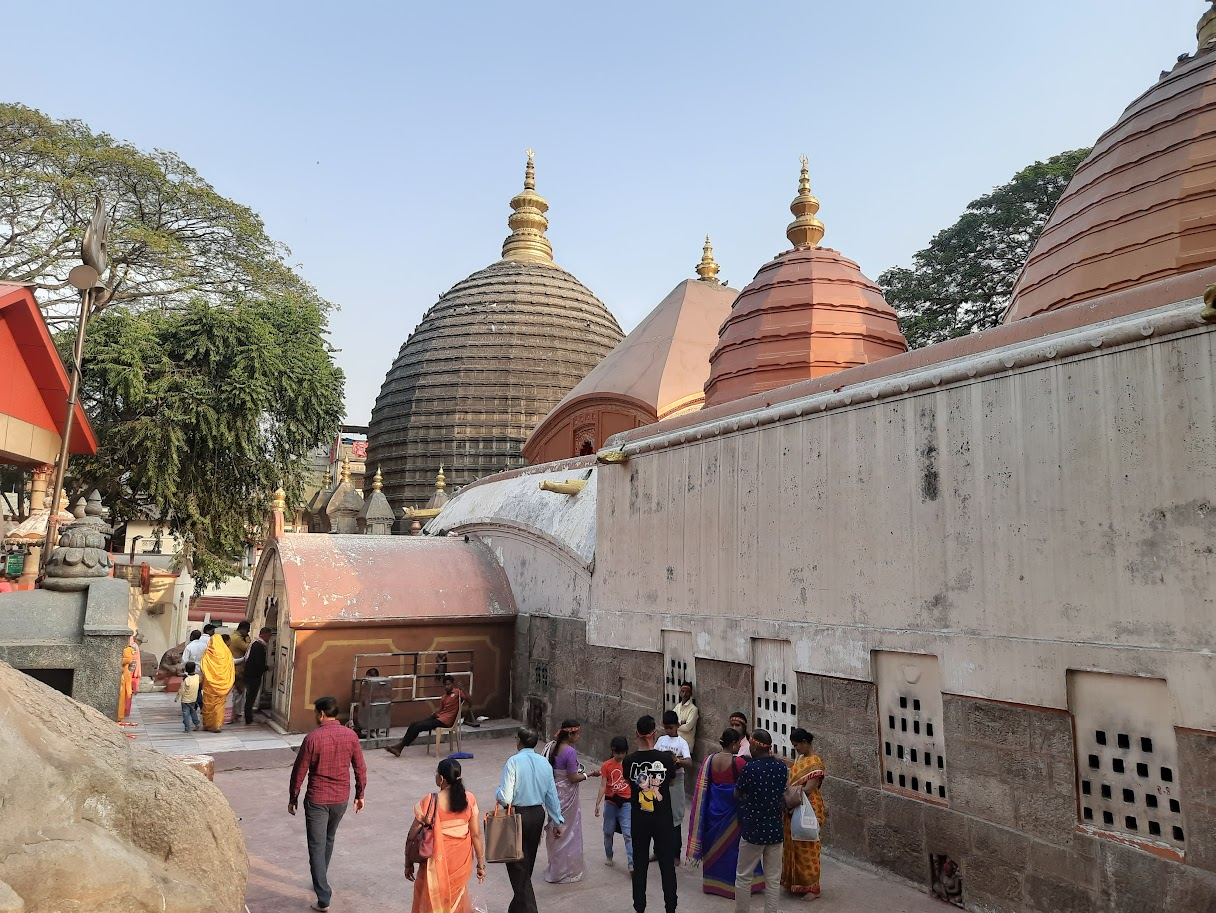
The temple has a certain, mystical aura around it. Goats are sacrificed in the premises, and it was a bit traumatic for me to see.

Cruise.
We had time on our hands, and some local friends told us about the Al Fresco cruise on the Brahmaputra River. Go without any expectations though! If you expect something on the lines of Santa Monica in Goa or the Fort Kochi cruise, you’ll be disappointed.

They have three kinds of
cruises - a half an hour-long sunset cruise, an early evening cruise and a
dinner cruise. We booked ourselves on the dinner cruise. The prices are a bit
steep, but you get to enjoy good food and the cultural richness of Assam - the
music, dances and songs adding to the beauty of the evening as you sail on the
tranquil waters.
Day 2 -Guwahati to Cherrapunji (Sohra).
There was a certain excitement in the heart as we drove to Cherrapunji the next morning – perhaps it was the thrill of exploring the unknown! Sohra is Cherrapunji’s original name – changed to the present by the British.
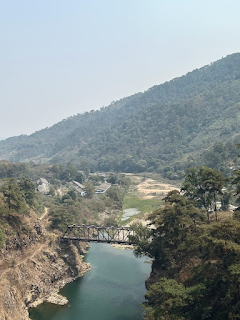
The roads are excellent and
the drive is pleasant. You get to enjoy endless winding hills, and beautiful
scenery. If you have a weak stomach, you’d want to carry an anti-emetic to
prevent travelling sickness. However, the curves not as steep as the ones in
Shimla or Munnar. I found it bearable for most parts.
Umiam lake.
On the way, our first stop was the Umiam lake. It is a huge expanse of blue and green that just takes your breath away! And remember this only the beginning of this journey!

This lake is closer to
Shillong, so if you are driving from Shillong to Sohra, you’ll find it on your
way too. There are various activities like boating, kayaking etc, but we didn’t
stop by for any of these, though we did soak in the beauty from a high view
point from where it looked even more beautiful.
Mawphlang Sacred Forest.
This is the place that I
left my heart in! And there it stays even today!
Maw means stone and you’ll find plenty of places with the prefix ‘Maw’ all over Meghalaya. Phlang means grassy.

Spread over acres and acres
of land (193 acres is what the guide told us), the Mawphlang Sacred Forest is a
home to hundreds of sacred, medicinal trees, birds and animals. The guide took
us on a short trek about half a kilometer into the forest, and I was left
mesmersised by the faint aroma of the flora and the melodious sounds of the
birds and insects as we walked.
The entrance into the forest felt like a secret door to an altogether different universe! It made me forget about the world outside, albeit for a little while. We were told that we aren’t permitted to take back even a dry twig or leaf outside and we did abide by the rules of the tribe, taking back only memories.

A flower that was in full bloom was the deep red coloured and very sacred, rhododendron. Apparently, the flower has medicinal usage and is also used in cooking. We also got to have a taste of sour, citrusy flower.

We were so reluctant to
leave the place that long after all pictures had been clicked and everything
that had to be said had been said, we stayed put, lolling on the ground for a
very long time, simply taking in the sky, forests, hills and everything that we
saw around us. Only the temptation of food (our stomachs were growling!) could
finally bring us back on our feet!
We got to enjoy a traditional Khasi lunch – one of the most nutritional and tasty foods I’ve enjoyed – a special green onion rice, two kinds of cooked vegetables (broccoli and cabbage, potato and cauliflower), two kinds of salads, a spicy red sauce, a very yummy mixed vegetable pickle, tasty dal and rice. I never knew I could whip up such an appetite!

The guide told us an
interesting fact about the matrilineal lineage of the tribes. The mother is the
head of the family and her youngest daughter not only stays with her husband in
her maternal home and has the responsibility of taking care of her parents but
also inherits all the property, though the other daughters may get a share. The
sons have to move out to their wives’ homes after they get married!
We also learnt that Meghalaya is home to three major tribes – the Khasis, the
Jaintias and the Garos. The hills are also divided between the three tribes
with the Khasis occupying the central part of the hill land and the Jaintias
and Garos on either side. The culture and language of the Khasis and the
Jaintias are also similar while Garos are a totally different tribe.
It was really difficult to
drag ourselves out of the place!
Stay.
We stayed in Sohra which in
on the East Khasi hills. Most places of tourist interest are in this belt
though you’ll find a few on the Jaintia hill too. Contrary to common opinion,
it does not rain continuously in Sohra. Māwsynrām holds the crown for the
wettest place on earth and it does not rain all year through here too.
The sun rises as early as 5.30 am and sets early too. So, it was pitch dark at 6pm, by the time we checked into our resort. We got to admire the beauty of the resort only next morning.

I observed that most resorts
have very few rooms, not more than 6-8. Hence it would be advisable to book
rooms first if you want a comfortable stay.
Also, a guide is mandatory
to understand the cultural richness of the place as well as to move around
effortlessly.
Day 3 – Arwah caves, Mawsmai Cave and Nokalikai falls.
The Arwah Caves are said to be about 65 million years old and were apparently below the sea at some point before rising up to form mountains. You can see some fossils of small creatures on the walls of the cave.

The walk up to the cave is pretty interesting and makes for
some great pictures. The caves are dark after walking inside to a certain point
so you had better not venture in without a guide, as it is very difficult to
mark your way out. There’s a lot of walking and back bending as you navigate
inside, but the thrill of being in a place like that is beyond what words can
describe.

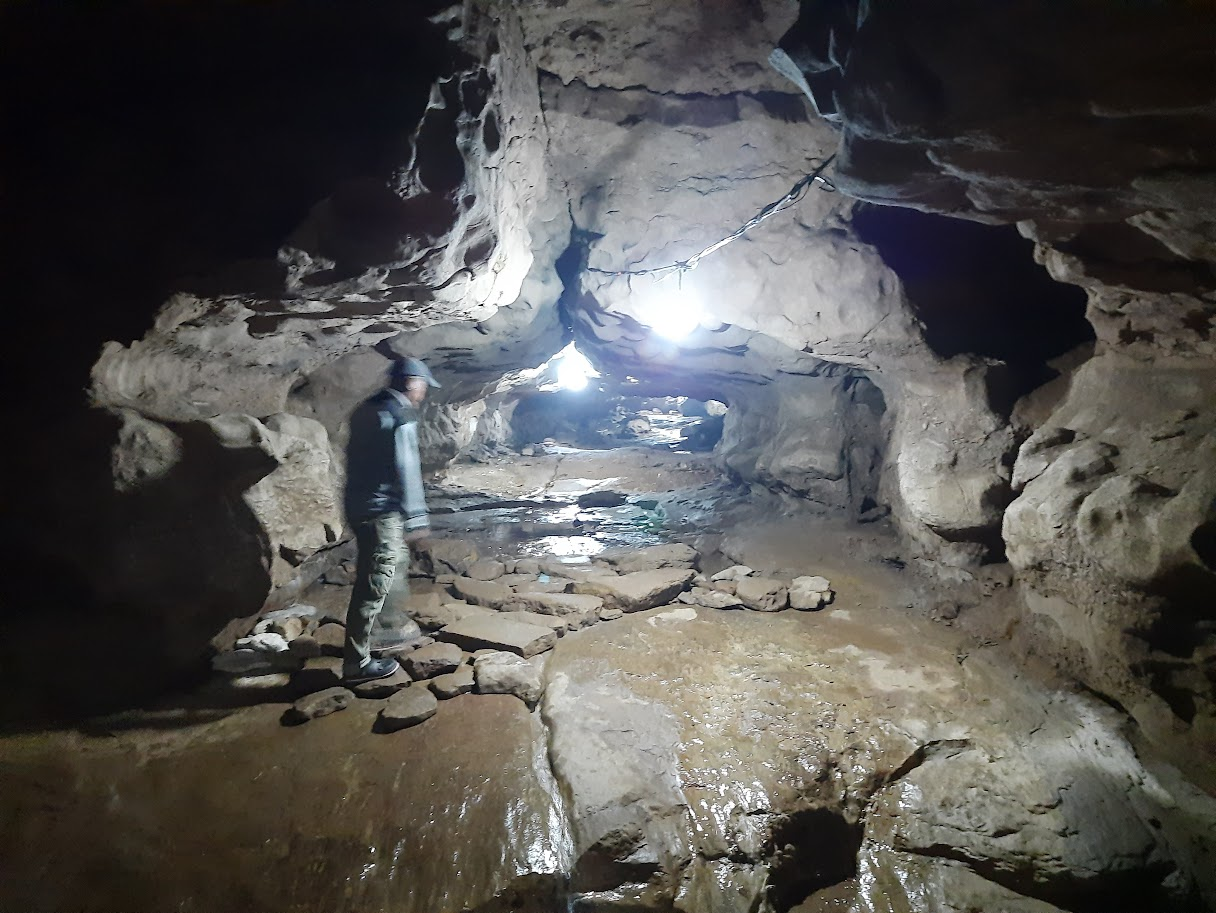
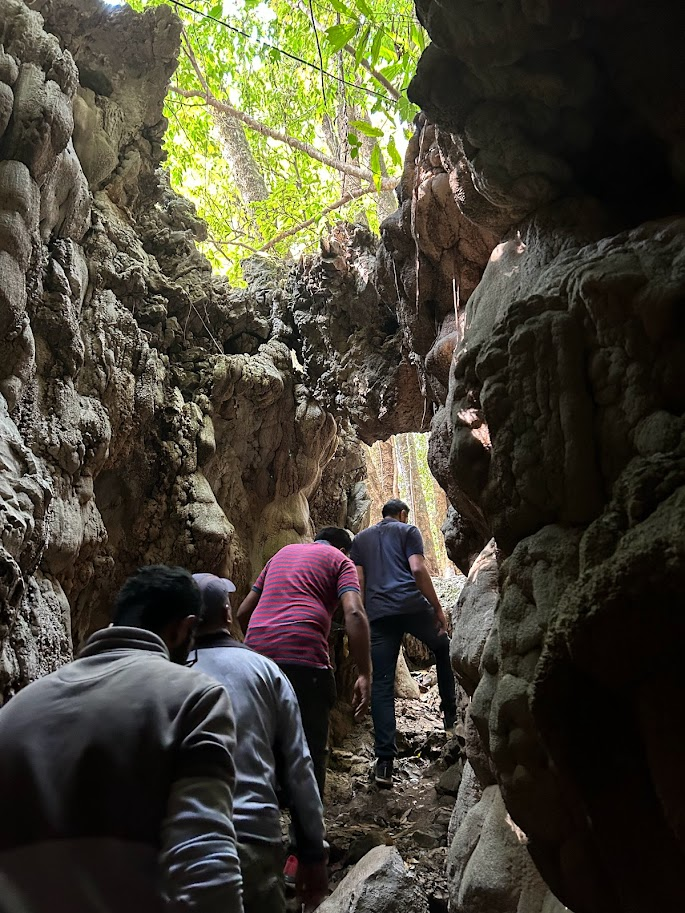
The Mawsmai caves have some amazing stalactite formations and are not as strenuous to navigate as the Arwah caves.
We also learnt that Meghalaya is famous for pineapples and we
couldn’t wait to try one the moment we found it outside the Mawsmai caves. True
to their popularity, they were the juiciest and sweetest pineapples I’ve ever
eaten in my whole life! This was just the start, because we went on to eat
pineapples at every given opportunity during our entire stay!
We later visited the Anthropology Museum run by Ramakrishna
Mission. It is a very interesting place to learn about the various tribes,
culture and way of living, not only in Meghalaya but also in the entire
North-Eastern part of our country.
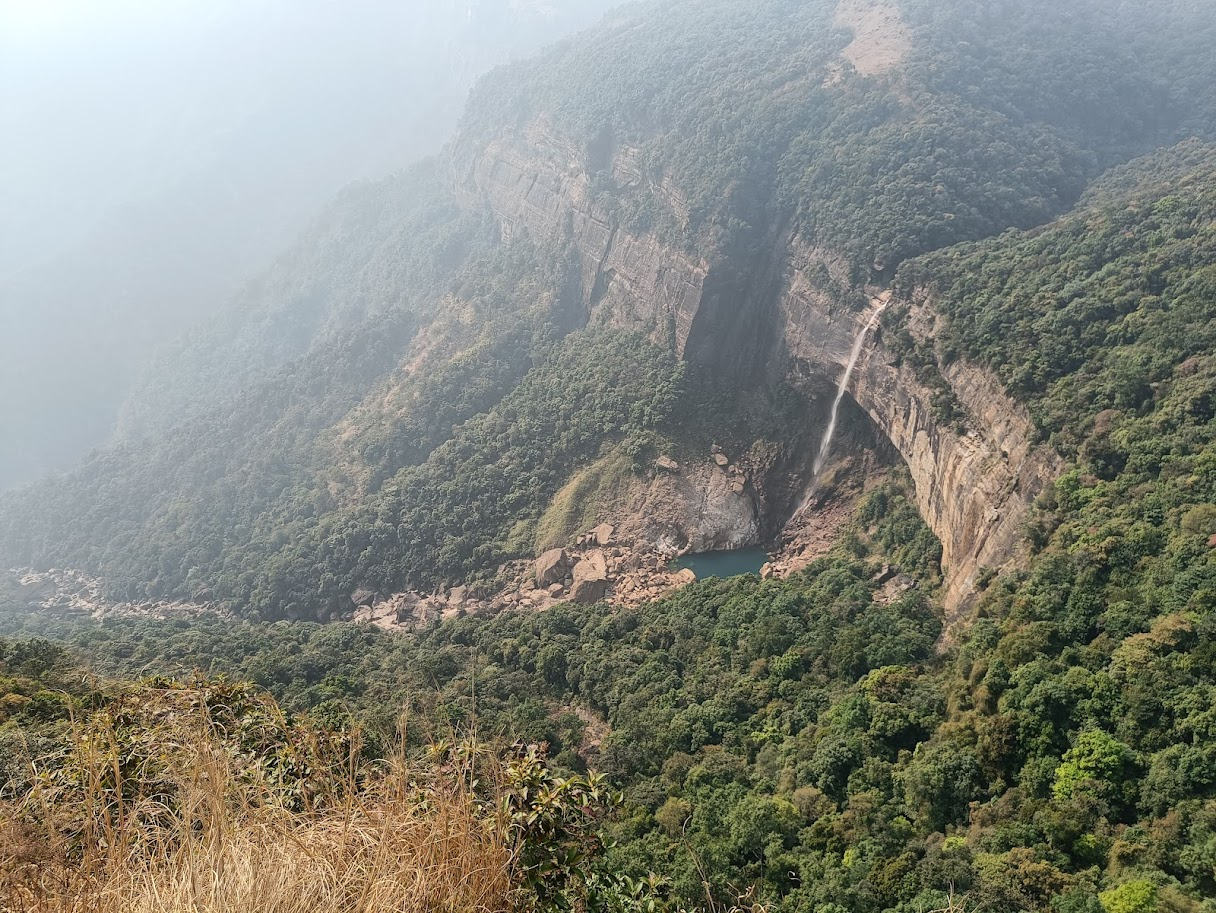
The Nokalikai falls is a short drive from the caves and has a gory history behind it, which haunted me for quite some time! Being the month of March, the falls were dry, with a very thin stream of water and were not very impressive. But our guide, Ban, told us that they are great when in full flow. The scenery, of course, is pretty impressive and I could imagine how majestic the place might look during the monsoon.

Meghalaya is home to
spices like pepper and cinnamon, and also to the world’s best turmeric –
lakadong turmeric – which has an exceptionally high curcumin content. You can
buy them here at the shops outside the falls.
Day 4 –
Waterfalls, waterfalls and more waterfalls!
Meghalaya is full of beautiful waterfalls! We went to the Lyngksiar and Mawsawah waterfalls. We also got into the cold and refreshing waters at the Lyngksiar falls. It changed the definition of ‘cold and refreshing’ in my dictionary! You really have to get in to know what I mean. The waters are so clear that you can see the bottom of the lake.
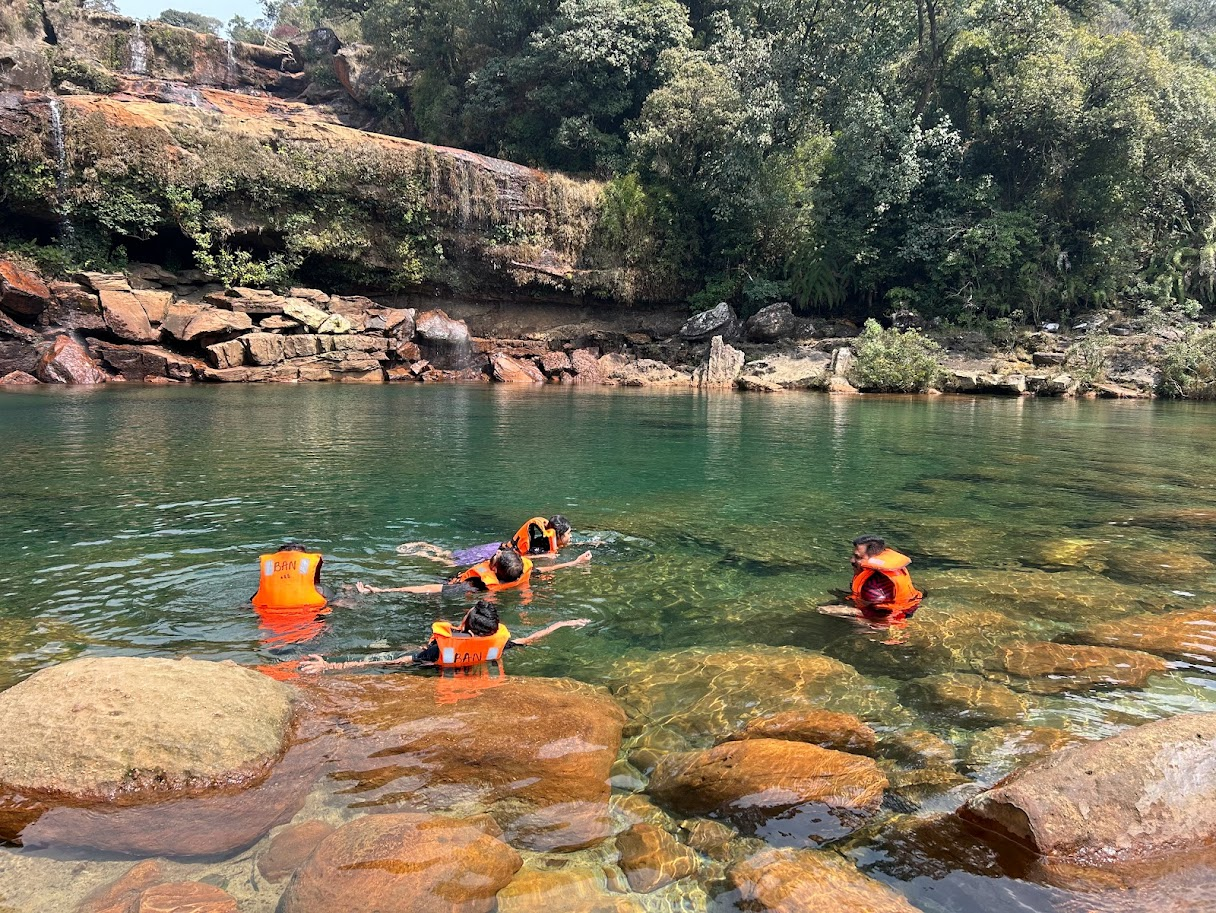
The waterfalls might
not have been in full force but we didn’t mind at all. I couldn’t feel my toes
and yet I didn’t want to come out! The Lyngksiar falls are great for
photography and we got some of our best clicks here. The Mawsawah is smaller yet
beautiful. You probably might not be allowed to swim in the monsoon and the
winters might be way too cold to get in.
We ended our day with
a visit to the Garden of Caves. It was still under construction and I didn’t
really find it enjoyable.
Day 5 –
The Living Double Root Bridge
This was by far the
most strenuous day of our visit. You need to be really fit to navigate through this.
The path to the double root bridge is 3500 steps long; one way. It is best to
start early to avoid the heat. It is advisable to wear comfortable
loose-fitting clothes, goggles, and a cap and carry water bottles and some
light snacks with you. Also, do not carry anything that is heavy or not needed
– backpacks and bags are better off in your car.
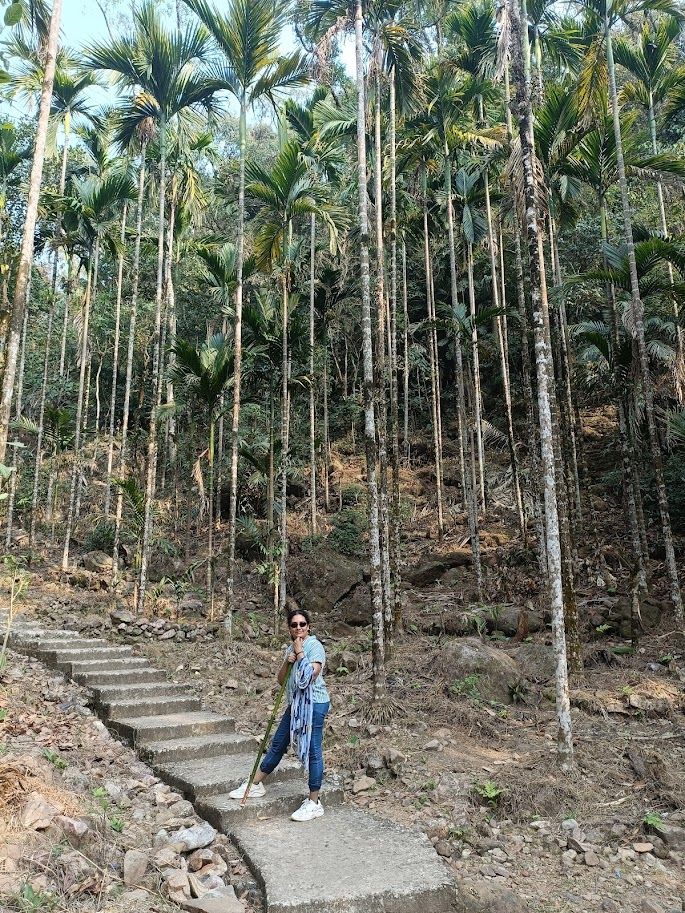
The steps are quite
steep and most people rent a bamboo stick for better support. You literally have
to climb down an entire mountain and climb up a part of another before you
reach the root bridge.
The breathtaking, eco-friendly, marvel of tribal engineering – the double root bridge – has been cleverly constructed to enable people cross the river when it is in full spate.


The falls and river
weren’t overflowing when we visited, but we got to enjoy a natural fish spa in
the shallow waters! Having the tiny fish nibble at our feet while we relaxed
our tired feet in the cold water, was an amazing experience!
Day 6 – Dawki,
Bangladesh border, Mawlynnong.
On our final day in
Meghalaya, we planned to start early and go to Dawki and Shnongpdeng and enjoy
the water sports. Unfortunately, we learnt that two elderly people had passed
away in Shnongpdeng and hence all activities were closed. I had never heard
something like this happening in a tourist place. But our guide told us that
the tribal people are very close knit and the entire community turns up for the
funeral and all activities are closed. On one hand we found it admirable that
such societies exist in these times, but on the other hand we were sad that we
could not get to enjoy the water sports we had planned for that day.
We, however, did go boating at the Umngot river at Dawki. The cool, clear, green-blue waters, and the imposing rock mountains on either side made it an unforgettable 45-minute boat ride across it.

There’s also that ‘spot’ which made me plan this place in the first place! I was imagining an entire river to be crystal clear and expected to take pictures of us levitating in the water, but apparently, there’s only a small area where water is shallow and the bottom can be seen. Nevertheless, even that was a big highlight, never having seen anything like that before!
We visited the India-Bangladesh
border too and clicked some pictures.
Finally, we visited Asia’s cleanest village – Mawlynnong. It’s quite an example they’ve set by keeping the place spic and span. It made me think that if they can, why couldn’t we?

Day 7 –
Meghalaya to Guwahati to Bangalore.
We originally had
planned to go to Pobitora Wildlife Sanctuary in Guwahati, on the last day,
however, our flight got rescheduled to an earlier time slot and we weren’t
ready to leave Sohra too early in the morning to make it to Pobitora and reach
airport on time. But if you have time, you could go to Pobitora and see the
one-horned rhino. The locals claim that there’s a 100% rhino spotting here.
We did buy some
lovely Assam tea before leaving the place.
Some takeaways.
There’s a stark
contrast between other tourist places and the North-East.
These places are
virtually untouched and pristine. There are no crowds thronging the places and
it feels calm and serene to enjoy the entire scenery all by yourself! Imagine
being the only group enjoying in an amazing lake under a cold waterfall! No
queues, no noise, no pollution.
The food is great and
we also found food without onion and garlic in every restaurant we ate at. Somehow,
the water tastes great too! The entry tickets are minimal and there are spotlessly
clean toilets everywhere.
The people are extremely
courteous and simple. They are very down to earth and smile a lot. We were touched
by the hospitality.
This actually felt
like a vacation. We weren’t rushed to move from one place to another, life
moved at a leisurely pace, we ate well, slept well, and we felt rested and
relaxed at the end of the trip.
Have you visited the North-East? Would you like to share your experience?